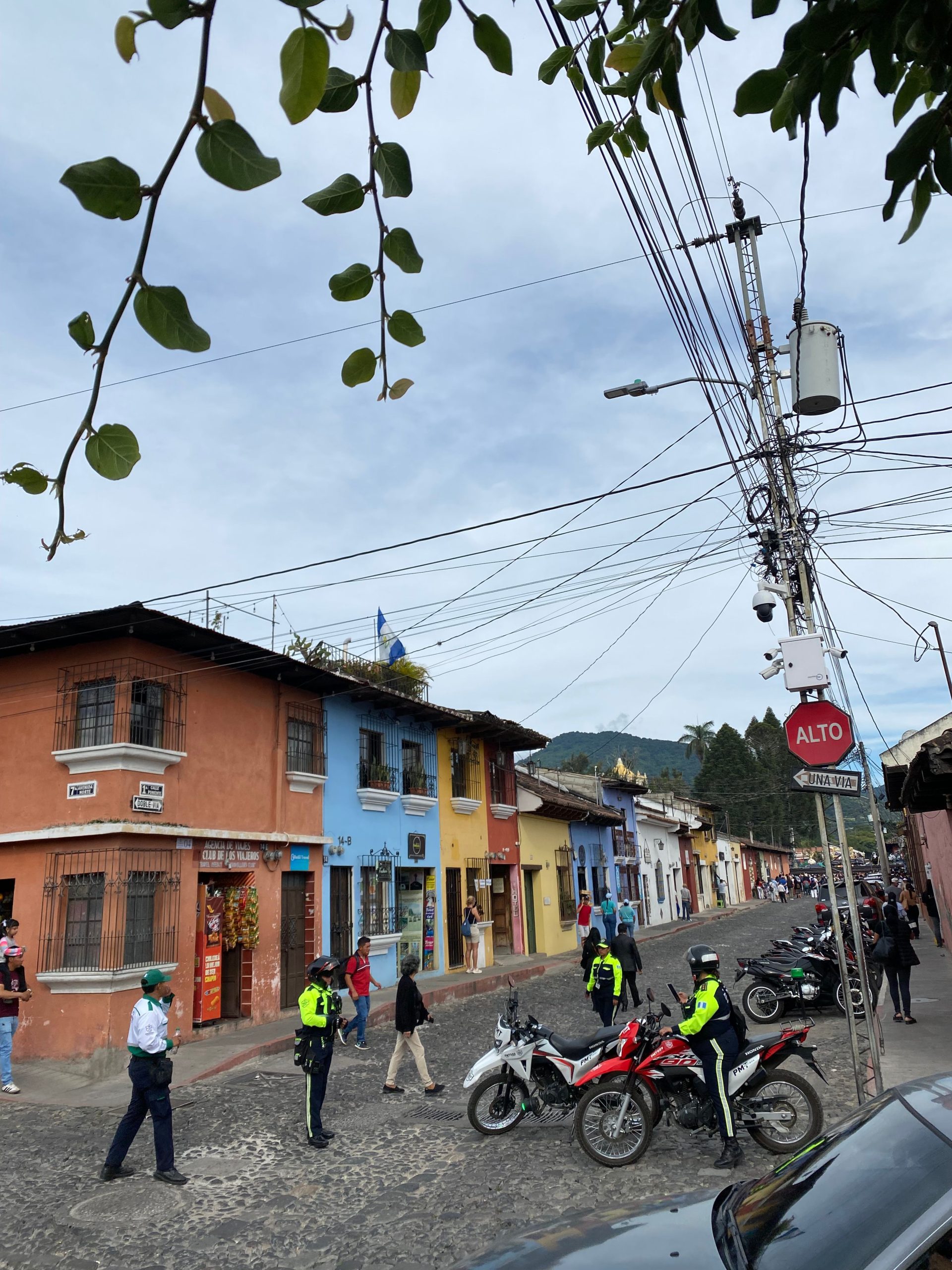
Colorful one-story homes line a quiet cobblestone
street in Guatemala
Oyundalai Odkhuu
My research project investigates the masculinization of immobility and the feminization of mobility within the broader transformation of pastoral life in rural Mongolia. Male herders who remain tied to the land are often marginalized and labelled as “dirty”, “unskilled” and ‘uncultured’ despite their contribution to intangible cultural heritage. Conversely, many women have abandoned pastoralism in search of urban opportunities. This study examines these marginalized social positions, and the epistemic vantage points they offer, revealing aspects of social reality that are often obscured.
One interlocutor’s reflection during the fieldwork strongly resonates with the lived experiences of male herders in rural Mongolia. He explained:
“Being a single male herder means ‘one must be a woman inside the home and a man outside’, and , in reality, in many ways, this might be a reflection of my life. In fact, when you return from herding, the house may be cold, and the food isn’t ready or is cold. By the time you cook and eat and head out again, the animals have already moved far away. Life is hard without a family (woman). I have plans to have a family, but it doesn’t happen as one wishes.” (excerpt from field notes, July 2025)
The significance of this research lies in opening space to rethink the importance of “situated knowledge”, which refers to all knowledge emerging from specific contexts, connections and lived experience. Such knowledge is vital for understanding society since it illuminates interrelatedness and unexpected possibilities that every knowledge comes from somewhere and serves some purpose. This project speaks on broader global challenges such as mobility, gendered labor, and rural livelihoods that resonate beyond Mongolia. Understanding how marginalized communities navigate social and economic transformations can offer valuable insights for researchers, policymakers, and anyone concerned with equity, cultural continuity, and sustainable futures. By examining pastoralism through the lens of gender and mobility, the project invites readers to reflect on how societal change affects different groups in uneven ways.
WORLD ANTHROPOLOGICAL UNION CONGRESS 2025
As a graduate student at National Chengchi University (NCCU) in Taiwan, I had the opportunity to share the above research on gendered transformations of pastoral livelihoods in Mongolia. at the World Anthropological Union Congress. Participating in this world leading congress, held in Antigua, Guatemala, from 3-8 November 2025, was a meaningful milestone in my academic journey.
Its core theme focused on recognizing “decolonizing methodologies” and “colonial legacies” that have shaped anthropological knowledge production. The emphasis on “epistemic justice” highlighted the urgent need to challenge Eurocentric frameworks and to recognize diverse, situated forms of knowledge, especially those of historically marginalized communities. As an emerging scholar, the conference broadened my horizons and allowed me to revisit pluralistic ways of being, knowing, and thinking.
Antigua, with its cobblestone streets, vibrant historical architecture, and quiet presence of surrounding volcanoes, offered a striking backdrop for the congress. The city’s mix of historical depth and cultural vitality created an inspiring atmosphere for anthropologists from around the world to gather, bring an academic discourse, and imagine new possibilities and challenges for academia.
A particularly valuable aspect of the conference was meeting and learning from experienced anthropologists working in related fields. During my panel discussion, I gained new insights into intersections of pastoralism and religion and how these shape pastoral livelihoods. Additionally, I engaged with a range of anthropological filmmaking projects, which offered thought-provoking perspectives on how visual media can convey lived experience.
Participating in the WAU 2025 Congress was not only academically enriching but also personally transformative. Engaging with scholars who are rethinking knowledge production encouraged me to sharpen my own methodological approach and to remain attentive to the voices and lived experiences of herders. This experience strengthened my commitment to producing research that is both ethically grounded and socially meaningful, and it will continue to shape the analytical directions of my future work.

A view of the Santa Catalina Arch, one of Antigua’s most
recognizable landmarks.

A popular hilltop viewpoint, Cerro de la Cruz provides
stunning panoramic views of the historic city, surrounding villages,
and the iconic Volcán de Agua.

Palacio de los Capitanes Generales — originally the residence
of Spanish colonial governors, now a cultural and administrative hub
housing the Museo Nacional de Arte de Guatemala.

Casa Herrera, Antigua’s historic colonial building and main
site for the conference.

La Merced Church and Convent — a vibrant colonial-era
Catholic landmark in the heart of Antigua.

Catedral de Santiago, the historic Roman Catholic cathedral
in Antigua Guatemala.

Engaged in a thought-provoking discussion on reinventing
anthropology in times of crisis.

Anthropological Film Exhibition at Colegio Mayor Santo Tomás de Aquino.